
Custom Luggage MOQ and Cost Guide for B2B Buyers
Understand custom luggage MOQ, the difference between stock models and full OEM projects, major cost drivers, sample planning, and the information suppliers need for an accurate quotation.
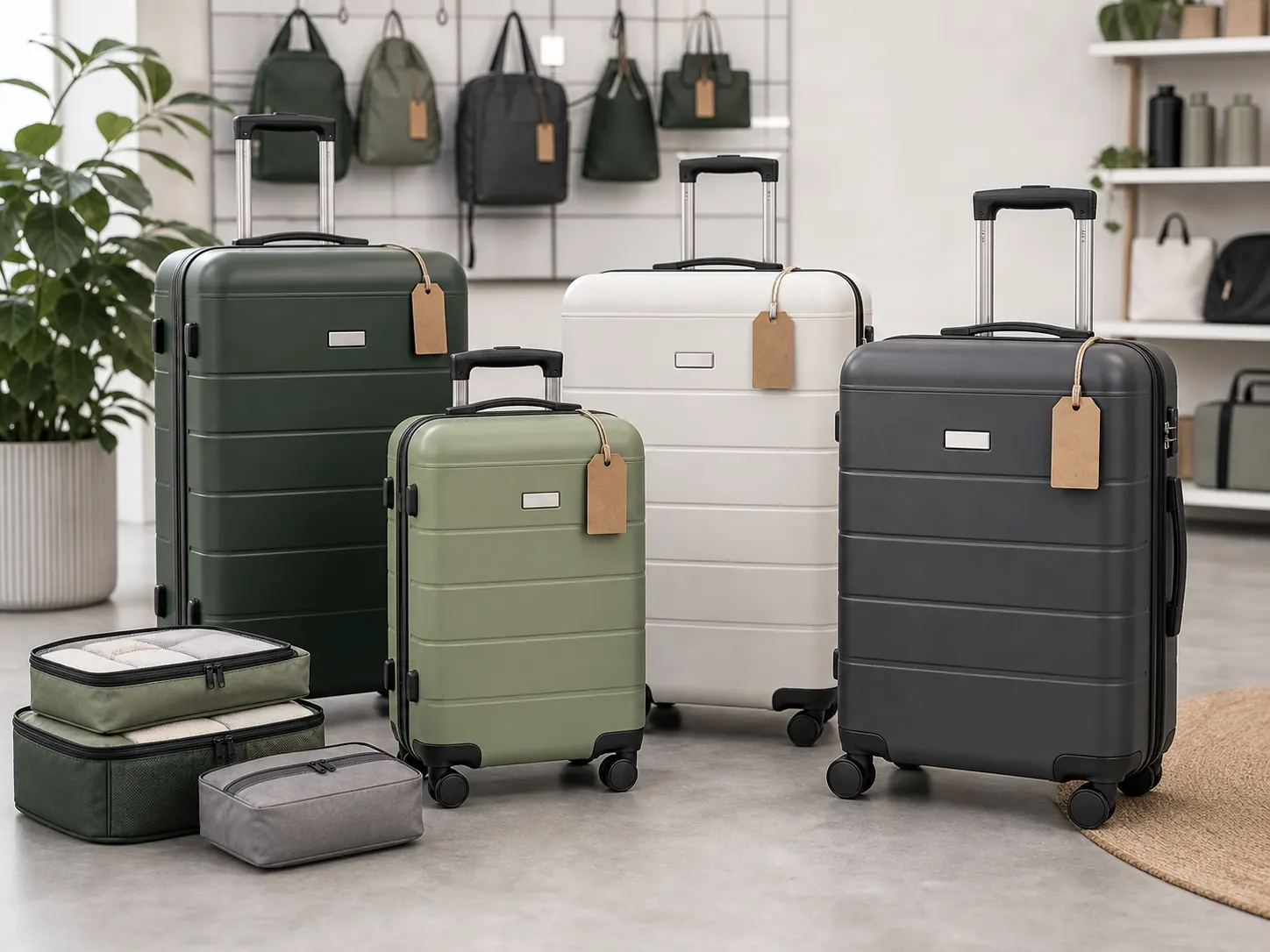
Buyer summary
What to know before requesting quotes
- Custom luggage MOQ is not a single industry-wide number.
- An existing model is normally the fastest route for a promotional or loyalty campaign.
- Many logo-ready hard-shell luggage programs begin around several hundred pieces per model or color, while luggage sets, exclusive colors, and more complex constructions can require higher quantities.
- Shell material and thickness, wheel construction, trolley quality, lock type, zipper, lining, handle parts, size, and order quantity form the base product cost.
Why custom luggage MOQ varies
Custom luggage MOQ is not a single industry-wide number. It changes with the shell material, suitcase size, wheel and trolley system, color, lining, logo method, packaging, and whether the buyer selects an existing model or requests a new construction.
A standard suitcase with a logo plate or printed mark usually has a more accessible starting quantity than a project that requires a new shell mold, exclusive hardware, custom lining, and retail packaging. Buyers should compare the customization level before comparing MOQ figures from different suppliers.
Stock model, private label, or full OEM
An existing model is normally the fastest route for a promotional or loyalty campaign. The buyer selects available sizes and materials, then adds approved branding and packing. This route reduces development work and can support a lower project risk.
Private-label projects may add custom colors, coordinated trims, logo plates, printed lining, labels, and branded cartons. Full OEM development changes the product structure or creates new tooling. It offers stronger differentiation but normally requires more time, a larger commitment, and tooling investment.
Typical MOQ planning by project type
Many logo-ready hard-shell luggage programs begin around several hundred pieces per model or color, while luggage sets, exclusive colors, and more complex constructions can require higher quantities. Travel accessories such as luggage tags, covers, packing cubes, and foldable duffels may follow different minimums because their materials and production lines are different.
Treat any online MOQ as a starting point rather than a final promise. The confirmed minimum should be tied to the exact size mix, color split, branding, packing, and production schedule shown in the quotation.
The main factors that change unit cost
Shell material and thickness, wheel construction, trolley quality, lock type, zipper, lining, handle parts, size, and order quantity form the base product cost. A 20-inch ABS carry-on and a three-piece PC luggage set should not be compared as if they were the same product.
Logo tooling, print positions, color matching, sample work, individual bags, insert cards, labels, color cartons, inspection, and shipping volume also affect the total campaign cost. Luggage is bulky, so carton dimensions and nesting plans can materially change the delivered cost.
How to keep the first order manageable
Start with a proven shell and hardware combination, limit the number of colors, use a clear logo treatment, and avoid changing several structural parts at once. A standard product with thoughtful branding and retail presentation can look more credible than an over-customized product with an unstable schedule.
Ask whether sizes can be nested, whether a shared trim color can be used, and which packing format protects the product without adding unnecessary volume. Confirm every approved simplification in the written specification so cost savings do not create quality surprises.
Sample and quality checkpoints
Review shell appearance, color, logo position, wheel movement, trolley extension, handle return, zipper operation, lock function, lining, stitching, odor, packing, and carton marks. For a retail-facing program, the sample should represent the approved appearance and functional standard as closely as possible.
Agree on the inspection stage before production starts. The checklist should match the final specification and destination requirements, including any labeling, documentation, or testing that applies to the selected product and market.
What to include in a luggage quotation request
Send the required suitcase size or set, estimated quantity, shell preference, target market, campaign use, logo artwork, preferred colors, packing needs, destination country, required arrival date, and target value. If some details are open, state which items the supplier may recommend.
A complete brief helps suppliers quote comparable options and identify the fastest realistic route. It also makes it easier to separate essential requirements from upgrades that can be considered after the first sample or initial order.