
How to Source Custom Shopping Trolley Bags for Supermarket Promotions
Compare custom shopping trolley bag materials, frames, wheels, capacity, branding, MOQ, quality checks, packing, and delivery planning for supermarket promotions.
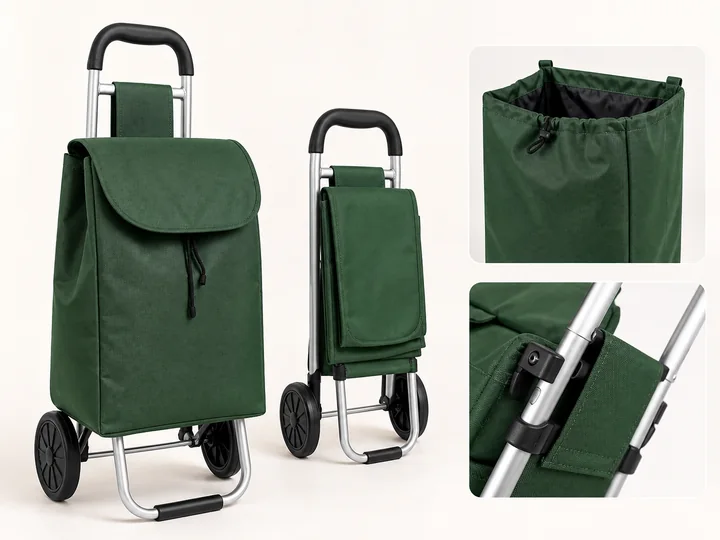
Buyer summary
What to know before requesting quotes
- A custom shopping trolley bag can work as a loyalty reward, seasonal household gift, member redemption item, or private-label retail product.
- A standard two-wheel trolley is the simplest starting point for flat pavements, store aisles, and everyday grocery use.
- Polyester and Oxford fabrics are common options because they can support practical color, print, pocket, and coating choices.
- Steel frames can provide a stable, cost-conscious route, while aluminum-alloy options may reduce weight and create a different finish.
Start with the supermarket campaign use case
A custom shopping trolley bag can work as a loyalty reward, seasonal household gift, member redemption item, or private-label retail product. The right construction depends on who will use it, how far they may pull it, what they will carry, and how the item will be distributed.
Define the campaign mechanic, target shopper, expected basket value, quantity, destination, and required arrival date before comparing models. A compact promotional route and a heavier private-label grocery trolley may look similar online but require different frames, wheels, bags, packing, and quality checks.
Compare two-wheel and stair-climbing structures
A standard two-wheel trolley is the simplest starting point for flat pavements, store aisles, and everyday grocery use. It normally offers a lighter structure, easier folded packing, and a more accessible target cost for large promotional quantities.
Six-wheel stair-climbing models can help on steps and curbs, but they add parts, weight, packing volume, and inspection points. Confirm the intended environment before choosing this upgrade, and test wheel rotation, axle alignment, frame stability, and folded operation on an approved sample.
Select the bag material, capacity, and closure
Polyester and Oxford fabrics are common options because they can support practical color, print, pocket, and coating choices. Ask for the fabric specification, coating or lining route, seam construction, reinforcement points, and whether the bag can be removed from the frame for cleaning or separate use.
Capacity should be described with both dimensions and intended contents rather than a volume claim alone. A top flap with a drawstring offers flexible access, while zipper closures, front pockets, thermal lining, and internal dividers may suit specific grocery or household programs.
Match the frame and handle to the intended load
Steel frames can provide a stable, cost-conscious route, while aluminum-alloy options may reduce weight and create a different finish. Tube dimensions, joints, handle grip, axle, wheel attachment, base support, and folding locks all affect how the trolley feels in use.
Do not rely on an unverified load number from a generic listing. Agree on the target load, then confirm the complete frame-and-bag specification and sample test method. The fabric may remain intact even when a weak joint, axle, wheel, or base creates the real failure point.
Plan logo visibility and retail presentation
The large front panel can support screen print, heat transfer, a woven label, or other decoration routes depending on fabric, artwork detail, quantity, and durability expectations. Keep important artwork clear of folds, seams, pockets, and the area covered by the top flap.
For a supermarket campaign, also confirm color references, barcode labels, insert cards, redemption instructions, individual packing, and carton marks. A useful trolley can feel more valuable when the retail presentation explains capacity, folding, care, and setup without making unsupported performance claims.
Understand MOQ, samples, and production timing
MOQ depends on the selected frame, wheel system, fabric color, printed artwork, accessories, and packing. Existing trolley structures with a customized bag are normally more efficient than a project that changes the frame, wheel mold, handle, and bag construction at the same time.
Allow time for quotation, artwork, sample preparation, sample delivery, approval, bulk production, inspection, and shipping. The production estimate should begin after the product specification, logo artwork, color, packing, and approved sample route are confirmed.
Build a product-specific quality checklist
Inspect frame dimensions, finish, folding action, locks, handle grip, wheel movement, axle alignment, base support, bag attachment, fabric appearance, stitching, reinforcement, closure, pockets, logo position, and packing. Functional checks should match the agreed target use and sample standard.
For retail programs, include quantity verification, barcode readability, insert placement, individual packing, master-carton strength, carton marks, and any destination-specific documentation. Record acceptable tolerances before bulk inspection so the buyer and supplier are checking the same requirements.
Send a quote-ready shopping trolley brief
A useful inquiry includes the campaign use, target shopper, required quantity, preferred two-wheel or stair-climbing route, approximate bag capacity, fabric and color, closure, pockets, logo artwork, packing, destination, and required arrival date. Share a target value when available so suppliers can compare realistic routes.
If the construction is still open, ask for two clearly separated options rather than one vague quotation. For example, compare a standard steel two-wheel model with a lighter aluminum route, showing the specification, MOQ, sample plan, packing volume, production time, and cost differences for each.